
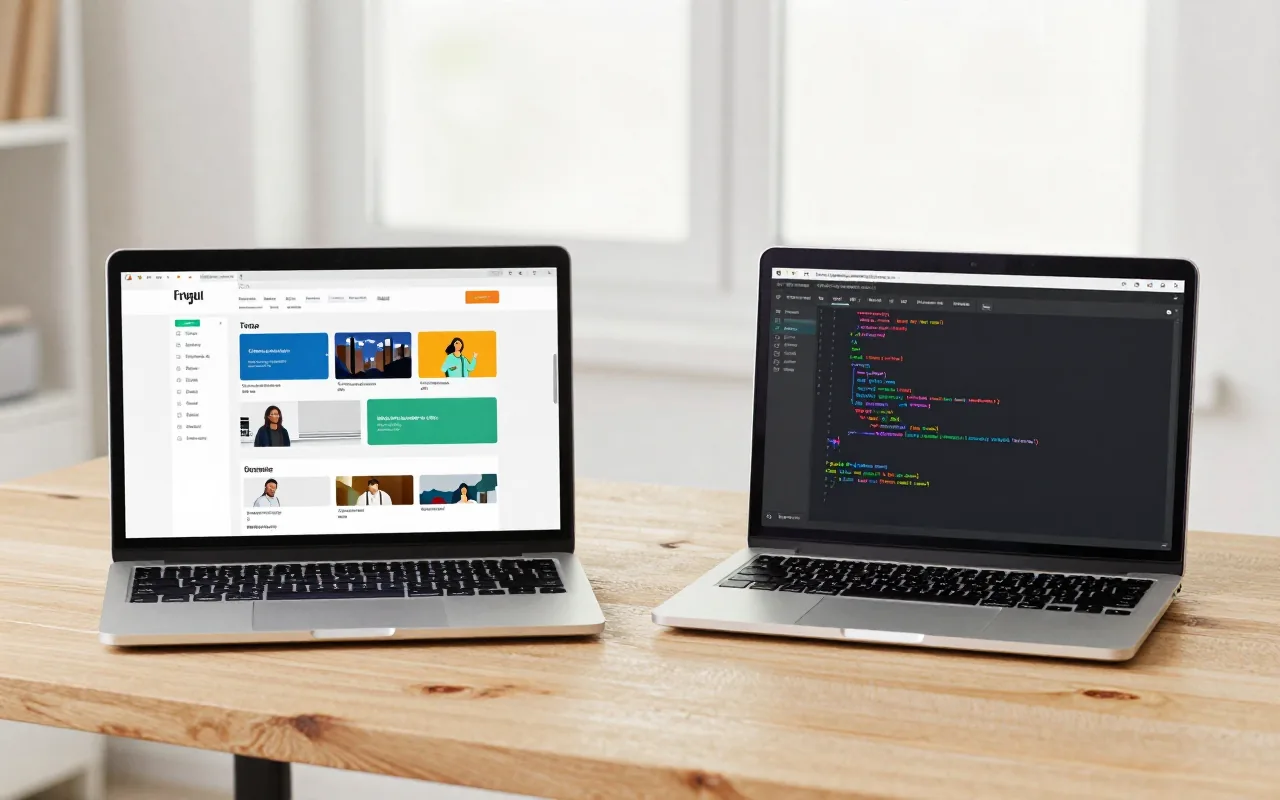
Should you just use a website builder? Sometimes, yes. A builder is the right tool for some businesses and a slow leak for others, and which one you are has little to do with budget. It comes down to what the site has to do.
What a builder does well
A builder gets you a presentable site in a weekend for a modest monthly fee, with hosting and security handled by someone else. If the site’s whole job is to look credible — who you are, what you do, photos, hours, a contact form — a builder does that job, and when someone brings us that situation we tell them to keep it. Paying developer rates for a site a template already covers is a bad trade.
Where the template stops fitting
The trouble starts when the site has to do something specific to how your business runs. The work that reaches us looks like this: ordering where food is priced by the pound, delivery fees that step up in tiers, and orders that take a deposit instead of full payment up front. No builder template holds rules like those, and that isn’t really the template’s fault. Templates are built around how most businesses work, while the value in yours tends to be whatever part works differently.
You can feel this wall before you hit it. It’s the third support thread about the same workaround, or the checkout step your customers keep calling about instead of using.
You’re renting the platform
The quieter difference is that a builder site lives on the builder’s platform. The export button, where one exists, hands you your text and images; the site itself stays behind. Leaving means rebuilding from scratch, which is a big part of why the monthly fee keeps getting paid long after the site stops fitting. It’s worth knowing before you sign up that leaving will cost more than joining did.
What hiring a developer changes
A developer builds the site around your process instead of bending your process around a template, and you own the result. It can live wherever you like and leave whenever you do. Between the two extremes sits a well-fitted WordPress build, which covers a lot of middle ground: more shape than a builder allows, less cost than fully custom, as long as someone looks after it.
The deciding question
Does the site have to do something specific to your business, like taking orders your way or pricing things the way you actually price them? If yes, that part is developer work, whatever platform carries the rest. If no, a builder may be all you need for now. We’ve written about what moves the price of a built site when the answer is yes; the same four things decide whether the answer is yes at all.
That’s the conversation behind our custom development work: a straight answer about which tool fits the job you’re actually hiring the site to do.