
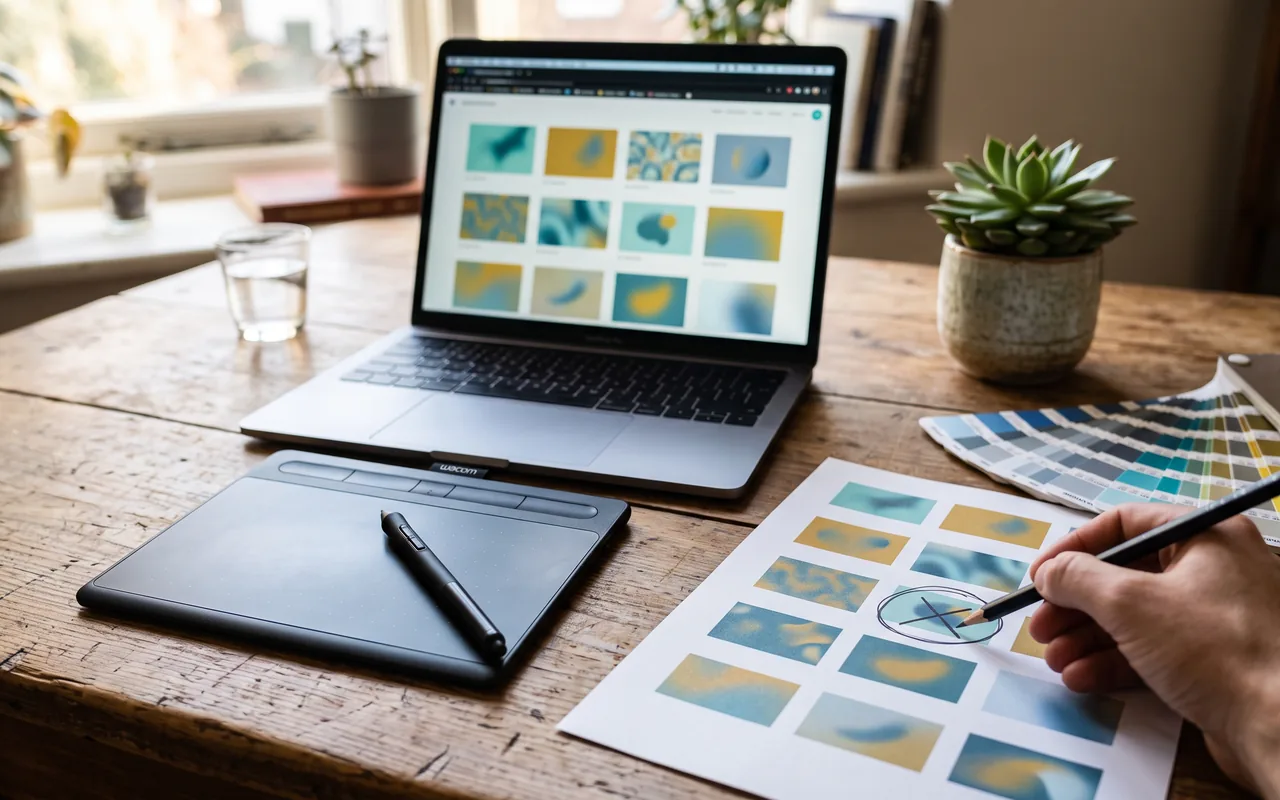
You can now generate a logo or a hero image in about the time it takes to describe one, so it is fair to ask why so much of what comes out looks like slop. Mostly it is because generating got treated as the whole job. Generating is only the first step, and the easiest.
What it is good for
Used well, a generator gets you past the blank page quickly. It will rough out layout directions while you work out which one is worth chasing, or make a background texture nobody wants to draw by hand.
Everything it produces is a draft, though. The trouble with AI in creative work tends to start when someone forgets that.
Where it falls down
It falls down where judgment is needed. Ask for an image with a sign or a label in it and the letters can look like language until you try to read them. These tools mangle lettering, so we keep words out of generated imagery entirely and set the real ones ourselves afterward.
It has also never seen your brand, which means it cannot tell you whether something is on it. What you get back is plausible and generic, and it arrives without a flicker of doubt. That is what we mean by slop: technically fine, and recognizably nobody’s.
The discipline that keeps it from being slop
Banning the tool would not fix any of this. What fixes it is a person doing the parts a person has to do. Someone decides what the piece is for and checks the output against the real brand, then fixes whatever the machine got wrong or skated past.
None of that is new. It is ordinary art direction, and the only thing that changed is how fast the first draft shows up.
What we do not hand to a machine
Some decisions stay with a person however much drafting the tool does. What sits at the core of an identity is one. Whether a mark still reads at the smallest size it will ever appear is another. It is the same reasoning behind designing a logo that survives at favicon size, where the limit is a person squinting at a browser tab and the answer is a decision somebody has to make. In the brand and creative work we do, we use AI wherever it saves real time, and make the calls that decide whether the result is any good ourselves.